
RAI Art collection
Hier kan de titel komen
Hier kan de intro komen.
At RAI Amsterdam, we believe that art enriches the spaces around us and can inspire both our visitors and our employees. Increasingly, we also connect the collection with our history.
Our collection comprises more than 100 works by Dutch and international artists, with a particular focus on the Netherlands and Amsterdam. The works can be found throughout our public spaces, meeting rooms and offices. We have been collecting art since 1961, when RAI Amsterdam opened at its current location.
Dutch artists such as Carel Visser, Giny Vos and Jeroen Henneman represent different generations, each exploring space, technology, humanity and imagination in their own way. While Visser makes structure and rhythm visible, Vos connects art and technology, and Henneman explores human perception.
Together, these artists represent more than sixty years of Dutch art history, a story that continues beyond RAI Amsterdam when you visit the PAN tonight. Their work says something not only about art, but about the Netherlands itself: a country shaped by design, experimentation, public space, technology and a human scale.
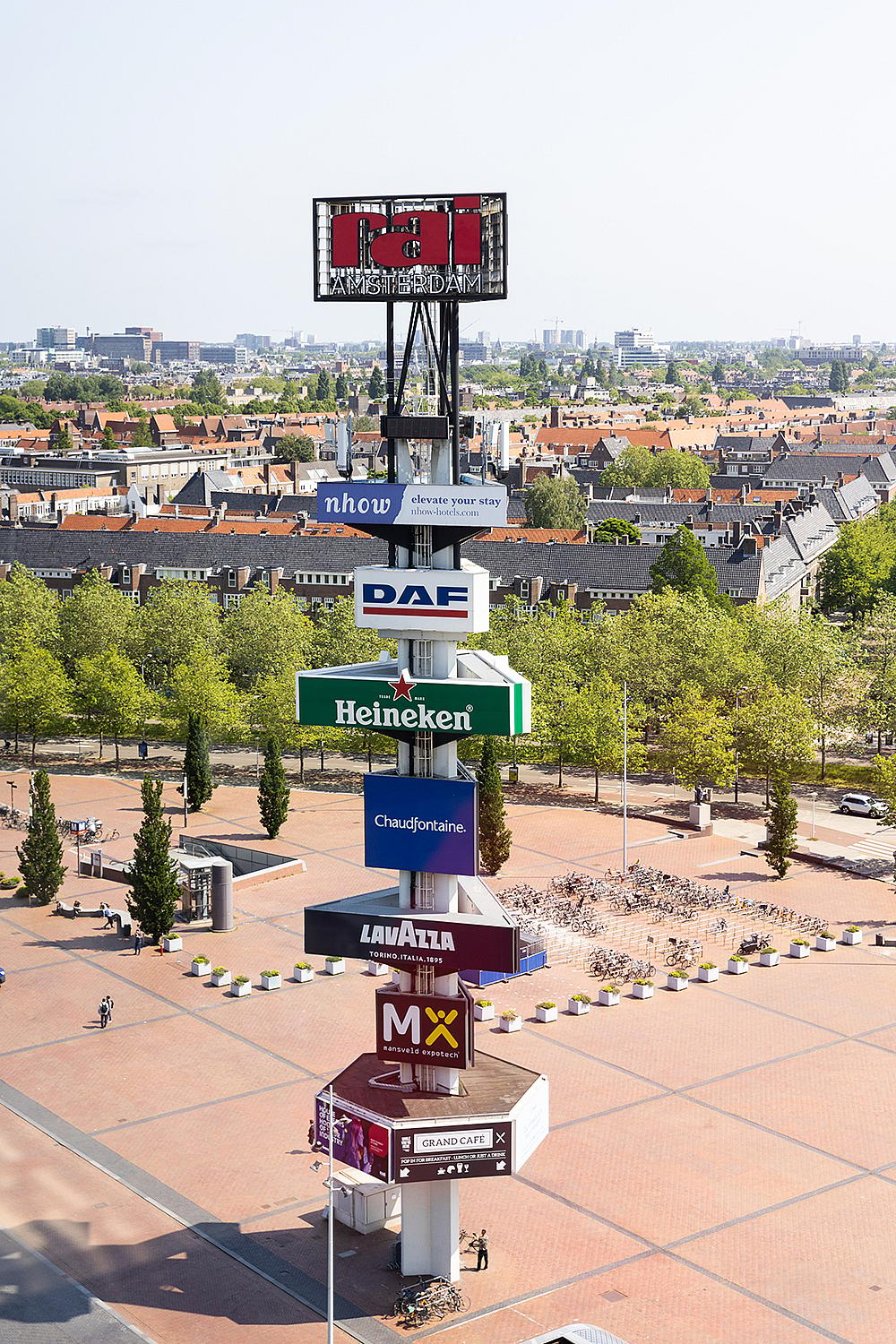
Het Signaal, 1961
Dick Elffers (1910-1990)
Dick Elffers was a versatile artist and graphic designer who worked across disciplines including typography, photography, painting, sculpture and illustration. He combined these different disciplines to create powerful visual compositions.
Recognition and a Sense of home
Knowing where you are at a glance. Through a single image. Art can serve as the visual signature of your event, giving abstract themes such as innovation, connection, sustainability or change a tangible form.
It is more than mere decoration. A powerful image reinforces the identity of your event and gives visitors a visual memory that can remain connected to a particular time, place and unique experience for years to come.
We see that same idea of a visual identity at RAI Amsterdam. Dick Elffers’ Het Signaal dates from 1961, a period of optimism in which international trade, the exchange of knowledge and public encounters were seen as drivers of progress. Het Signaal gives that optimism a face. Not simply as a signpost or advertising object, but above all as a landmark for a place where people come together to discover new ideas.
How do you use art, form and colour as visual anchors? Something new for every edition, or perhaps deliberately not? And do you go for the original, or incorporate a reproduction into your event design? Now that would be something. Just imagine a Van Gogh alongside your keynote.
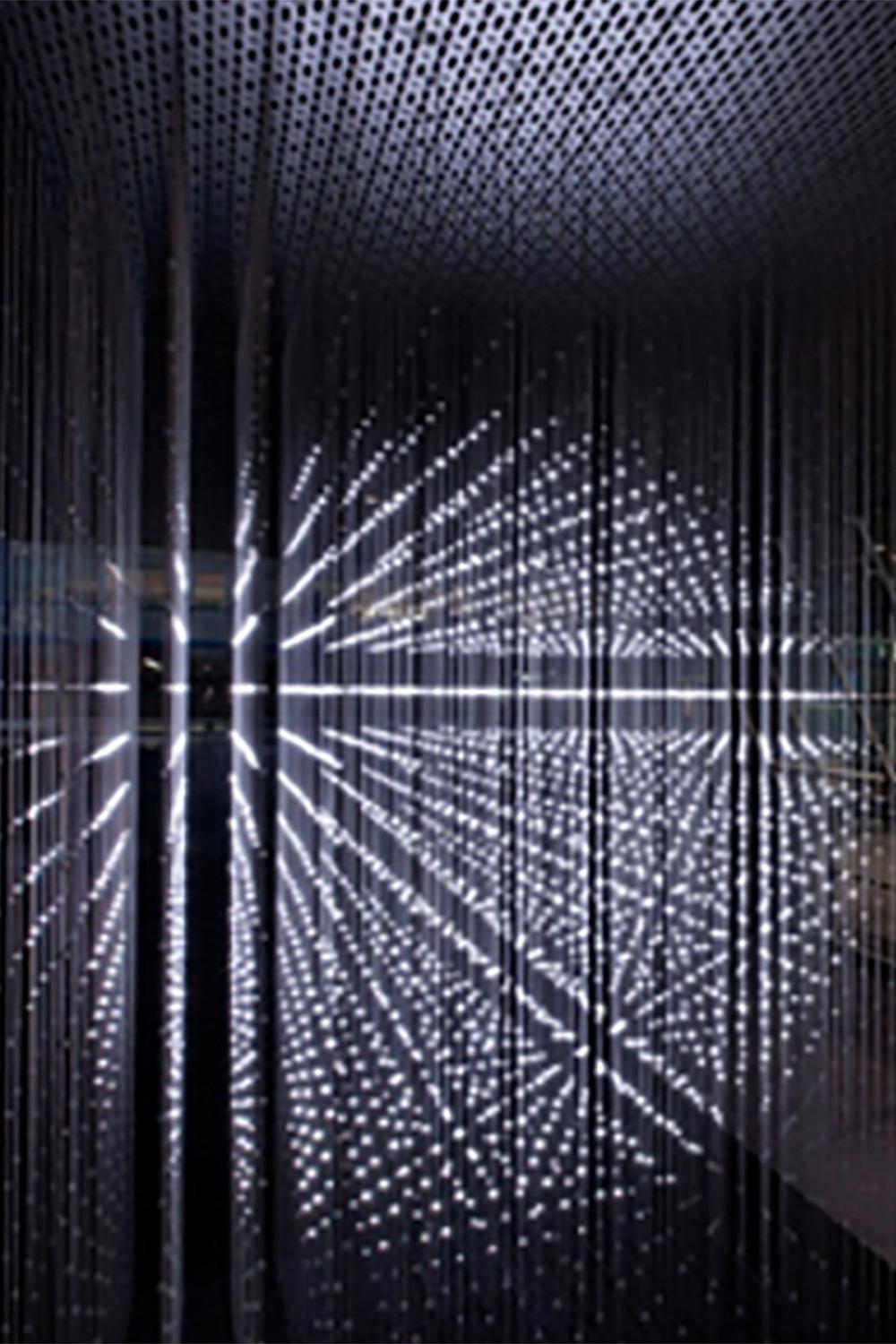
Het Kristalpaleis, 2009
Giny Vos (1959-)
Giny Vos works with light, technology and installations. At Entrance D, 4,096 points of light create ever-changing backgrounds in the installation, which was acquired when the Elicium was completed.
Energy and Creativity
Art affects our brains. Research shows that looking at art activates different areas of the brain involved in attention, emotion, interpretation, self-reflection and creativity.
It captures our attention, evokes a response and makes us think. For a moment, we step out of autopilot and look differently at what is happening around us. That creates opportunities at events.
A carefully chosen work of art, for example at an entrance, can spark curiosity and open visitors up to new ideas and encounters. Art is much more than decoration. It can start conversations, make a place recognisable and become part of the experience: a way to strengthen connections and open up new ways of thinking, both consciously and subconsciously. We often forget about the latter.
Do you consciously give art a place in your event? For example, at an entrance where you want visitors to take a moment to mentally recharge?
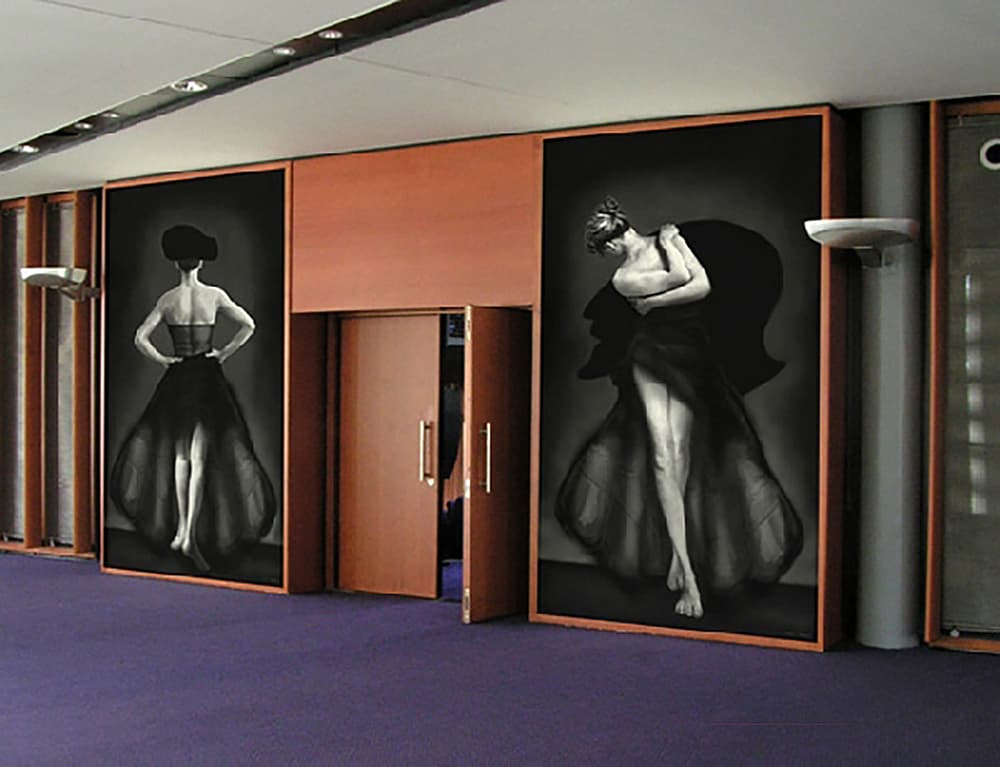
Rugzicht balletdanseressen, 2005
Schilte & Portielje | Huub Schilte (1953-) & Jacqueline Portielje (1958-)
The artist duo has been working together since 1997. Their works are created from photographic fragments that they digitally transform and combine, drawing, painting, adding and removing elements along the way. This work can be found in the Auditorium.
Fixed and Fleeting
Can permanent art in a venue be challenging for an organiser? It can be, but it doesn’t have to be.Naturally, you want your event to have an identity of its own, and often that means allowing the venue itself to fade into the background. But looking at what is already there can open up new possibilities. A work of art that initially seems to get in the way may suddenly fit perfectly with a new theme. Art then becomes not something you simply have to accommodate, but an extra layer that connects the venue and the event.
This may be one of the most interesting forms of event design: rather than trying to completely transform a space, discover what is already there and add a new layer to it. Bringing together the permanent identity of the venue and the temporary world created by the organiser.
Take the works in the Auditorium, for example. They may feel like a natural fit for theatre performances, but at business events they tell a different story. The tension between reality and imagination is an important characteristic of the artists’ work. Could you use that as an organiser?
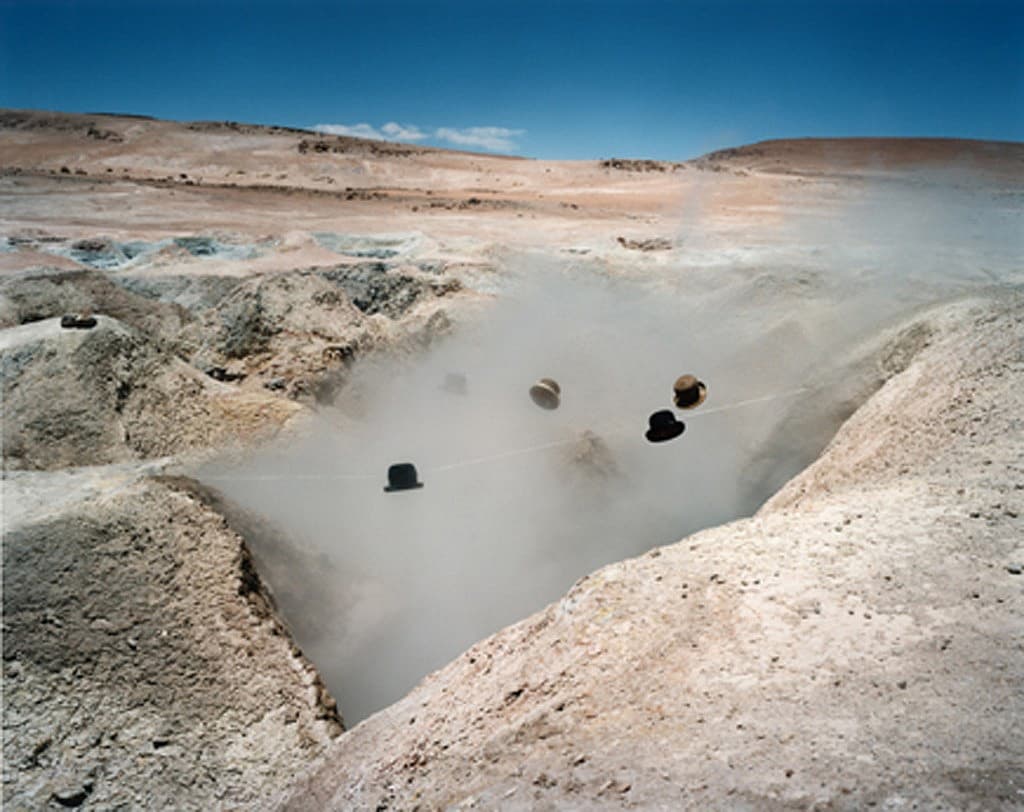
Harvest Time, 2006
Scarlett Hooft Graafland (1973-)
Scarlett Hooft Graafland creates surreal photographs in which simple, colourful interventions create unexpected situations in vast landscapes. Her work plays with scale, perspective and the boundary between reality and imagination. This work is displayed in the offices in the Elicium.
Freedom within a frame
Art encourages us to think beyond existing frameworks. Especially when we look at images that somehow don’t seem to make sense. That very contradiction captures our attention and makes us wonder: what am I actually looking at? How does this work?
Events can benefit from moments of this kind of disruption. In an environment where visitors expect a constant flow of information, people and stimuli, an unexpected work of art in a quiet space can offer a moment of wonder and reflection. It invites visitors to look at their surroundings from a different perspective.
In event design, art can be a deliberate addition: a place that briefly takes visitors out of the usual route or programme and creates space for new ideas, perspectives and conversations.
A work like Scarlett’s offers a different frame of reference; the image doesn’t quite seem to make sense. Do you want that at your event? Absolutely. Sometimes visitors simply need a moment outside the usual frame.
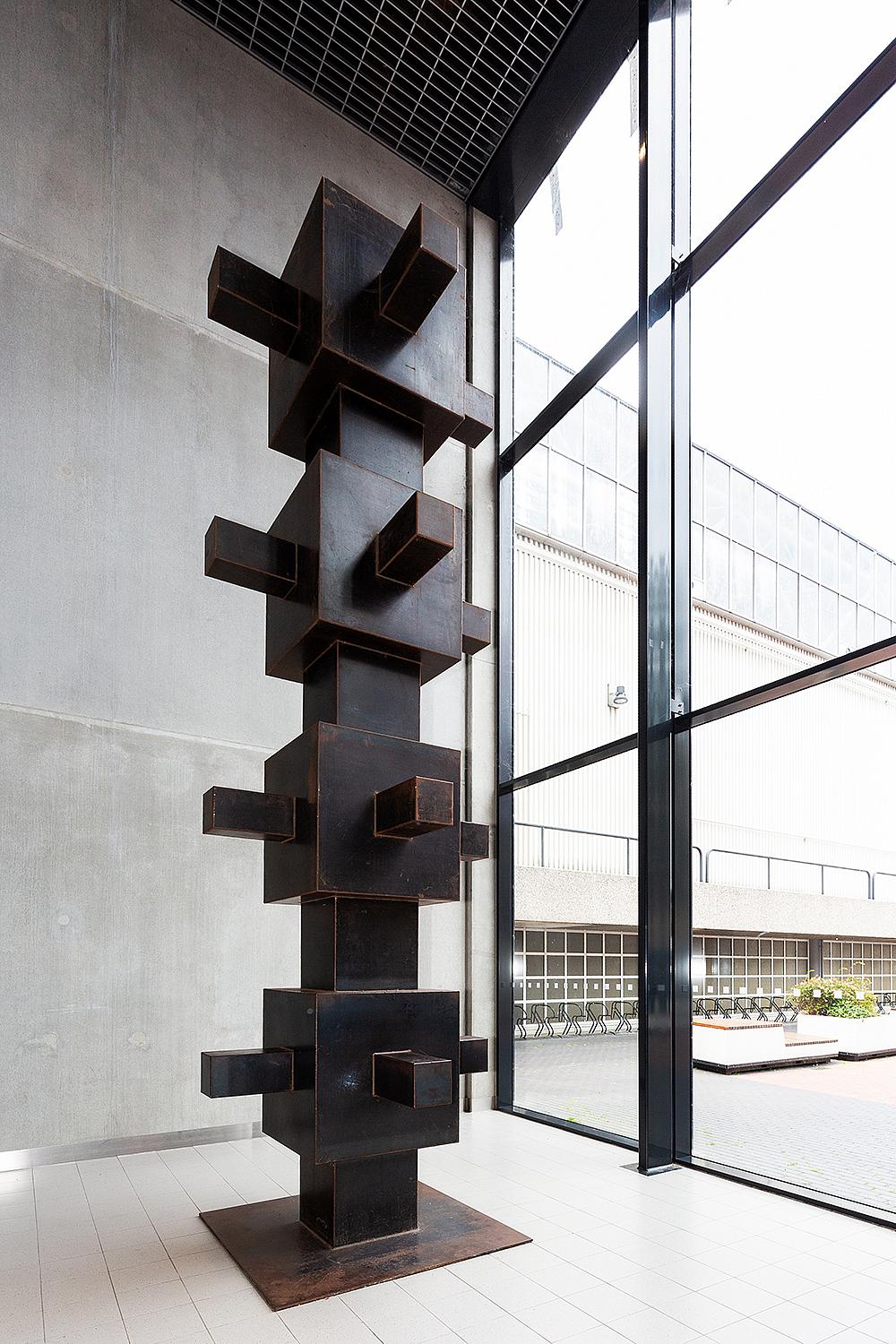
Vier gestapelde blokken, c. 1961
Carel Visser (1928–2015)
Carel Visser is considered one of the most important Dutch sculptors of the post-war period. His work explores structure, repetition, reflection, connection, space and material. The sculpture at RAI Amsterdam is located near Entrance P4
A bold connection
Increasingly, the value of an event is created outside the conference room. One-to-one meetings, curated matchmaking... Networking is a crucial part of any event. But it can also be challenging, because not everyone networks in the same way. How do you make contact? Where do you meet?
This is where art can serve not only as a visual anchor in a space, but also as an invitation to start a conversation. Art as an icebreaker. A striking work gives extroverted visitors something to talk about straight away, while also offering introverted visitors or those sensitive to stimuli an easy conversation starter... or an excuse to mentally step away from the crowds for a moment.
Carel Visser’s distinctive sculpture was acquired when the conference centre opened and served as a landmark in the Congress Lounge for many years. Some organisers have such special memories of it that we recently moved the sculpture back to its original location for a while. Because it had become part of the organiser’s own history.
Does your organisation use art to spark interaction during networking moments? And do you tell the story behind it?
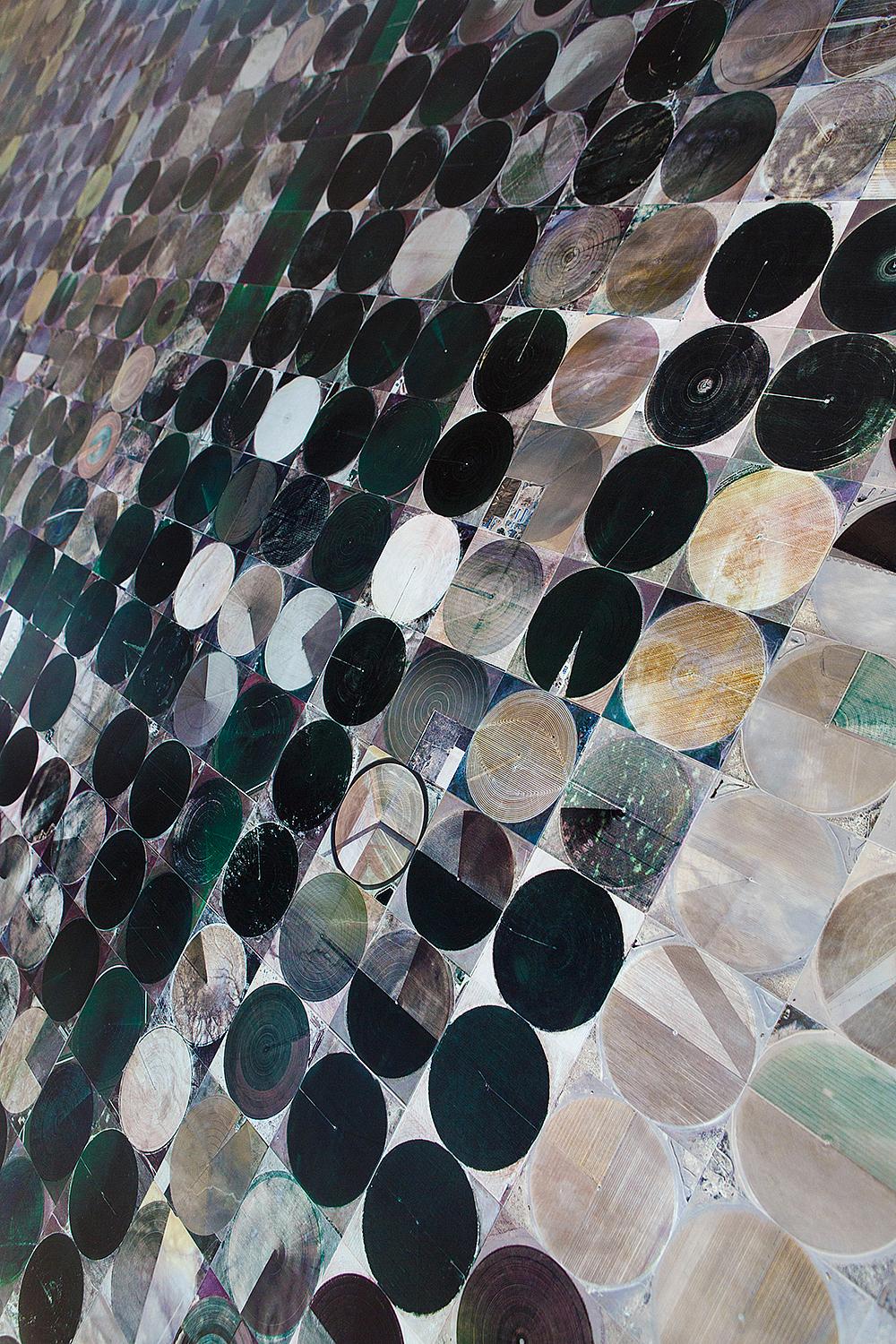
Crops, 2015
Gerco de Ruijter (1961-)
Gerco de Ruijter photographs landscapes from unusual elevated viewpoints, often using kites. As a result, recognisable details disappear
and landscapes are transformed into abstract patterns and compositions. Crops, a series of crop circles, was acquired when the Amtrium was built and is a permanent feature on the first floor.
Zooming in, zooming out
At a great event, everything comes together: you see connections, hear different perspectives and rediscover the bigger picture.
That is exactly what a good work of art can do. It invites you to take a step back, look differently and make space for new ideas. But art can also do the opposite: draw your attention to detail. To look closely, discover a fragment and notice something you may have overlooked at first.
How do you create moments to zoom in and zoom out at your event? Do you use art or design to help create them? Gerco’s work offers a powerful metaphor. At first, it looks like a tiled wall, almost abstract. But as you move closer, the image changes and you discover countless fields of agricultural land. As a visitor, you could simply walk past. But what happens if you stop for a moment and consider the relationship between the parts and the whole?
Focus and perspective.